Polish Pavilion
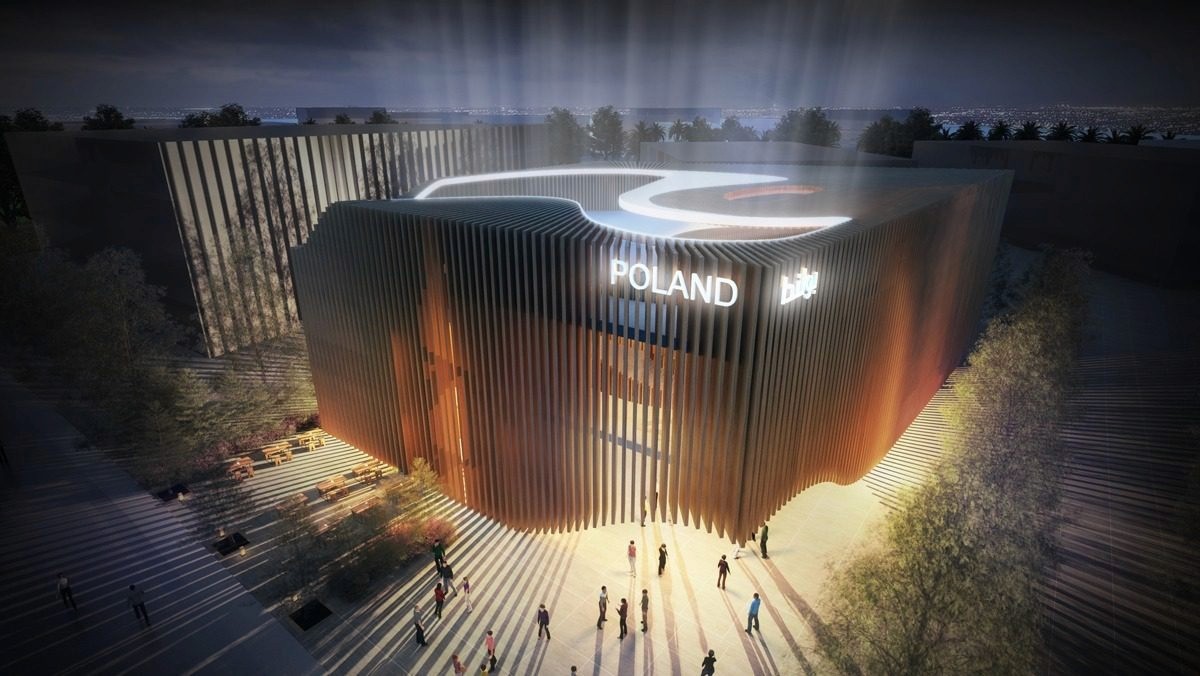
The Polish Pavilion was developed as a design competition entry for Expo 2020 Dubai. The pavilion was conceived to place equal emphasis on architectural form and the interstitial spaces between elements, where connected sequences create functional, poetic, and immersive volumes.
edge Architects was appointed as Design Architect, responsible for developing the competition proposal and the architectural narrative of the pavilion.
Location: Dubai, UAE | Year: 2018 | Client: Polish Investment & Trade Agency | Status: Design Competition
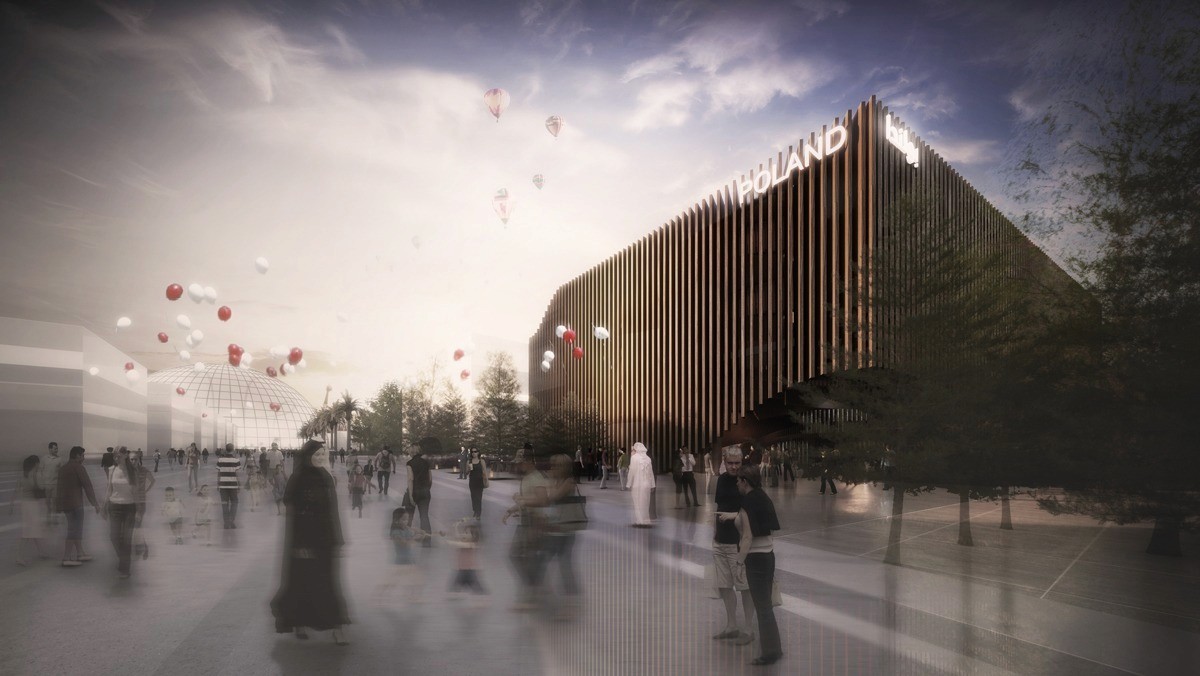
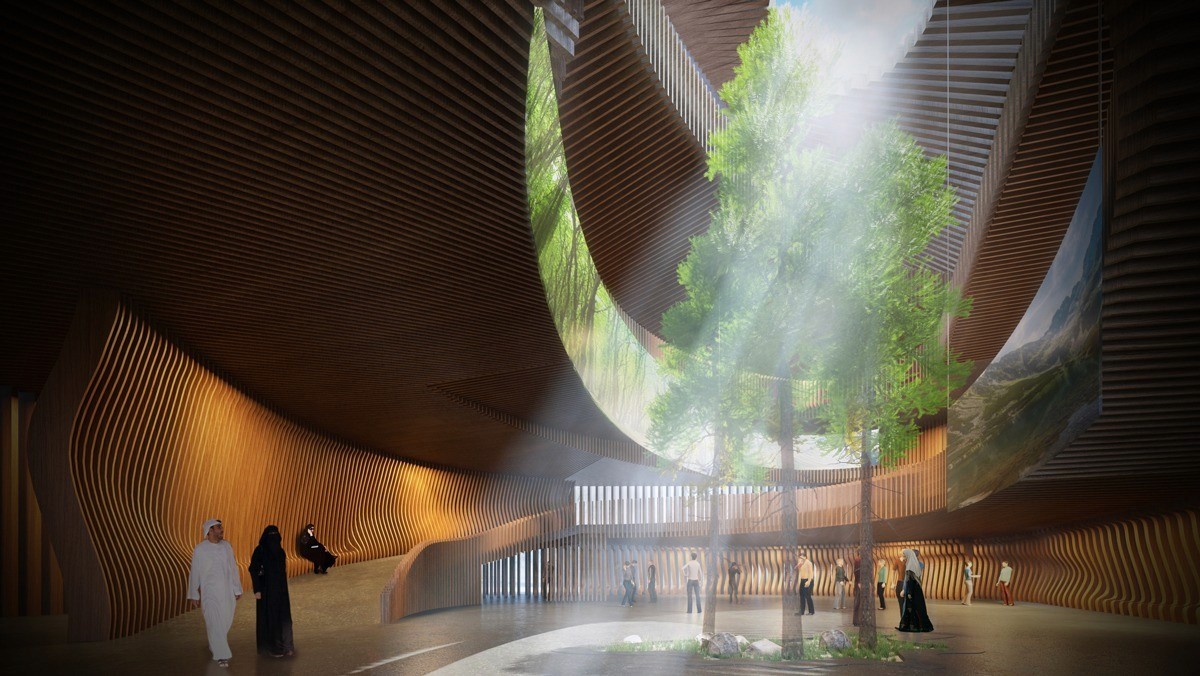
The pavilion experience is organised as a continuous sightseeing path beginning at the entrance zone on the southern side of the western plot. Visitors are guided through a spatial journey that represents Poland’s geographical regions, supported by 4D impressions including smell, sound, visual, and tactile effects. These sensory elements reinforce the natural values and environmental diversity of the country.
The path progresses from mountainous landscapes through midlands to the seashore, referencing Poland’s major ecosystems. This sequence creates an immersive experience composed of a series of spatial snapshots that convey the atmosphere of travelling through Poland.
A central architectural element of the pavilion is the ramp, which connects different levels, ecosystems, interior spaces, and exterior zones. The ramp is conceived as a continuation of the building’s skin, based on principles of penetration and continuity. Smooth material transitions and organic forms express movement, flexibility, and mobility throughout the pavilion.
The façade and interior finishes are constructed entirely from recycled, LEED-rated wood products sourced from Poland. The primary building elements consist of modular wooden panels manufactured from furniture production waste, forming an eco-conscious construction system. Each module is mechanically connected and designed for dismantling and reuse following the exhibition.
Post-expo, the modules can be repurposed through recycling or adapted for alternative uses, including installations in children’s playgrounds, restaurant seating, wall installations, relaxation zones, or resale to private parties and institutions. The system also allows for redistribution through charitable initiatives, including donation or auction.